Godfather of Biophilic Design Dr. Stephen R. Keller
“Biophilic design is an approach that seeks to fuse nature with architecture—not just inspiring natural design but specifically affecting how buildings and communities function.”
Stephen Kellert
Professor, Yale University
As our cities continue to grow and urbanize, we risk losing that innate relationship with the natural environment. how can we thoughtfully integrate it into the spaces we design.
Let me take you through a simple way of understanding this powerful concept and why it matters—not just for beautiful interiors, but for healthier people, stronger communities, and a more sustainable interior design economy.
Biophilic design requires repeated and sustained engagement with nature.
The Five Elements × Biophilic Design Framework
| Vastu Element | Biophilic Principle | Interior Design Application | Human Benefit |
|---|---|---|---|
| 🌍 Earth (Prithvi) | Natural materials, organic textures | Stone, wood, clay, bamboo, earthy colours | Stability, comfort, grounding |
| 💧 Water (Jal) | Presence of water, flowing forms | Indoor fountains, water walls, reflective surfaces | Calmness, stress reduction |
| 🔥 Fire (Agni) | Natural light, warmth | Daylighting, warm lighting, sunrise orientation | Energy, vitality, productivity |
| 🌬️ Air (Vayu) | Natural ventilation | Cross ventilation, operable windows, indoor plants | Fresh air, cognitive performance |
| 🌌 Space (Akash) | Prospect, openness, visual connection | High ceilings, uncluttered layouts, views of nature | Creativity, mental clarity, wellbeing |
At BellaFantacia Arte Ltd, we design spaces where the Five Elements of Vastu meet the science of Biophilic Design, creating environments that are beautiful, sustainable, and deeply connected to human wellbeing.
The principles behind biophilic interior design
Direct nature: daylight, plants, water, fresh air. The unglamorous basics that somehow keep getting forgotten.
Natural analogues: materials and patterns that gesture at nature without literally being a tree, an organic mesh texture, a rippling metal finish, that kind of thing.
Prospect and refuge: a bit of open view, paired with a bit of shelter. Humans, like cats, like to see the whole room while sitting somewhere slightly hidden.
Mystery and complexity: spaces that unfold gradually instead of announcing the entire floor plan from the lift doors. A bit of intrigue, basically, rather than a single flat reveal.
Core Elements Shared Across Terms
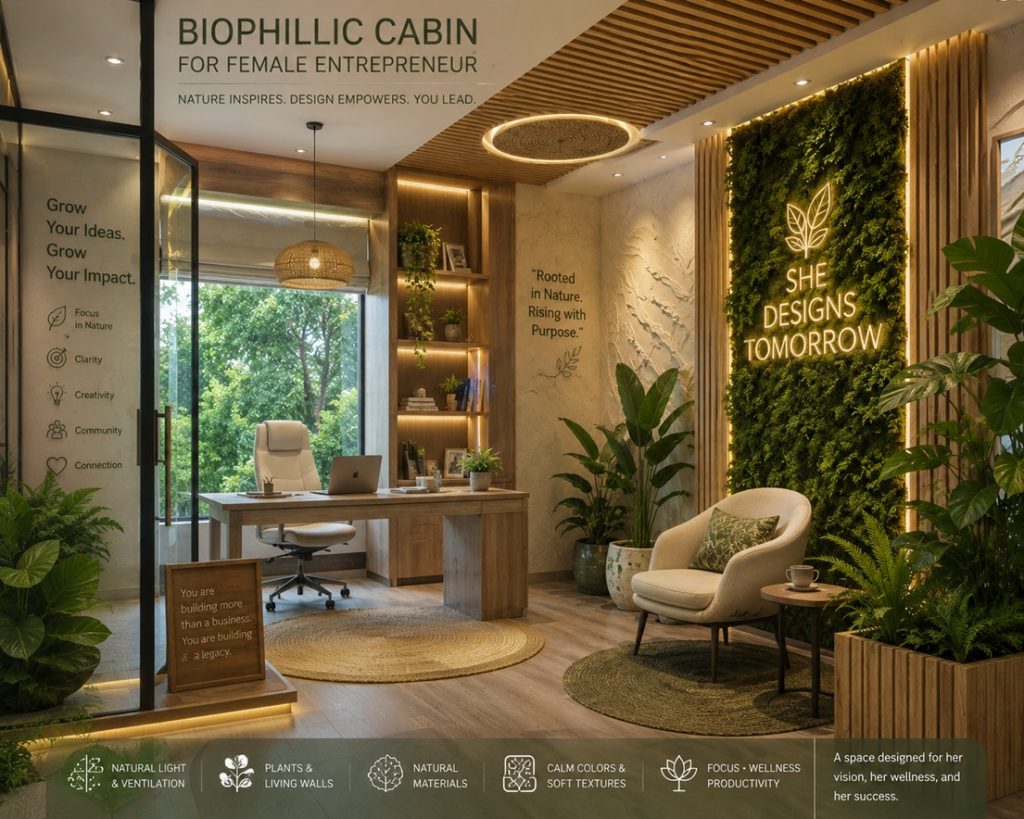
Sunlight: Large windows and skylights.
Living plants: Indoor gardens and green walls.
Raw materials: Unfinished wood, stone, and rattan.
Organic shapes: Curved furniture and wave-like patterns
One of the greatest benefits of biophilic design is its positive impact on productivity. Humans have evolved in close connection with nature, and our brains respond positively to natural environments. When workplaces incorporate daylight, fresh air, natural materials, greenery, organic forms, and views of nature, they create environments that support focus, creativity, and cognitive performance.
Biophilic design helps reduce mental fatigue, lower stress levels, and improve concentration. Employees working in nature-inspired spaces often experience greater engagement, better decision-making, and increased job satisfaction. These benefits translate into measurable business outcomes, including higher productivity, improved collaboration, reduced absenteeism, and enhanced employee retention.
Biophillic Design …
Post by : RuchikaDesign
Post date : 12/11/2021
Godfather of Biophilic Design Dr. Stephen R. Keller
“Biophilic design is an approach that seeks to fuse nature with architecture—not just inspiring natural design but specifically affecting how buildings and communities function.”
Stephen Kellert
Professor, Yale University
As our cities continue to grow and urbanize, we risk losing that innate relationship with the natural environment. how can we thoughtfully integrate it into the spaces we design.
Let me take you through a simple way of understanding this powerful concept and why it matters—not just for beautiful interiors, but for healthier people, stronger communities, and a more sustainable interior design economy.
Biophilic design requires repeated and sustained engagement with nature.
The Five Elements × Biophilic Design Framework
| Vastu Element | Biophilic Principle | Interior Design Application | Human Benefit |
|---|---|---|---|
| 🌍 Earth (Prithvi) | Natural materials, organic textures | Stone, wood, clay, bamboo, earthy colours | Stability, comfort, grounding |
| 💧 Water (Jal) | Presence of water, flowing forms | Indoor fountains, water walls, reflective surfaces | Calmness, stress reduction |
| 🔥 Fire (Agni) | Natural light, warmth | Daylighting, warm lighting, sunrise orientation | Energy, vitality, productivity |
| 🌬️ Air (Vayu) | Natural ventilation | Cross ventilation, operable windows, indoor plants | Fresh air, cognitive performance |
| 🌌 Space (Akash) | Prospect, openness, visual connection | High ceilings, uncluttered layouts, views of nature | Creativity, mental clarity, wellbeing |
At BellaFantacia Arte Ltd, we design spaces where the Five Elements of Vastu meet the science of Biophilic Design, creating environments that are beautiful, sustainable, and deeply connected to human wellbeing.
The principles behind biophilic interior design
Direct nature: daylight, plants, water, fresh air. The unglamorous basics that somehow keep getting forgotten.
Natural analogues: materials and patterns that gesture at nature without literally being a tree, an organic mesh texture, a rippling metal finish, that kind of thing.
Prospect and refuge: a bit of open view, paired with a bit of shelter. Humans, like cats, like to see the whole room while sitting somewhere slightly hidden.
Mystery and complexity: spaces that unfold gradually instead of announcing the entire floor plan from the lift doors. A bit of intrigue, basically, rather than a single flat reveal.
Core Elements Shared Across Terms
Sunlight: Large windows and skylights.
Living plants: Indoor gardens and green walls.
Raw materials: Unfinished wood, stone, and rattan.
Organic shapes: Curved furniture and wave-like patterns
One of the greatest benefits of biophilic design is its positive impact on productivity. Humans have evolved in close connection with nature, and our brains respond positively to natural environments. When workplaces incorporate daylight, fresh air, natural materials, greenery, organic forms, and views of nature, they create environments that support focus, creativity, and cognitive performance.
Biophilic design helps reduce mental fatigue, lower stress levels, and improve concentration. Employees working in nature-inspired spaces often experience greater engagement, better decision-making, and increased job satisfaction. These benefits translate into measurable business outcomes, including higher productivity, improved collaboration, reduced absenteeism, and enhanced employee retention.